
The question
What forms of support do entrepreneurs need beyond funding alone?
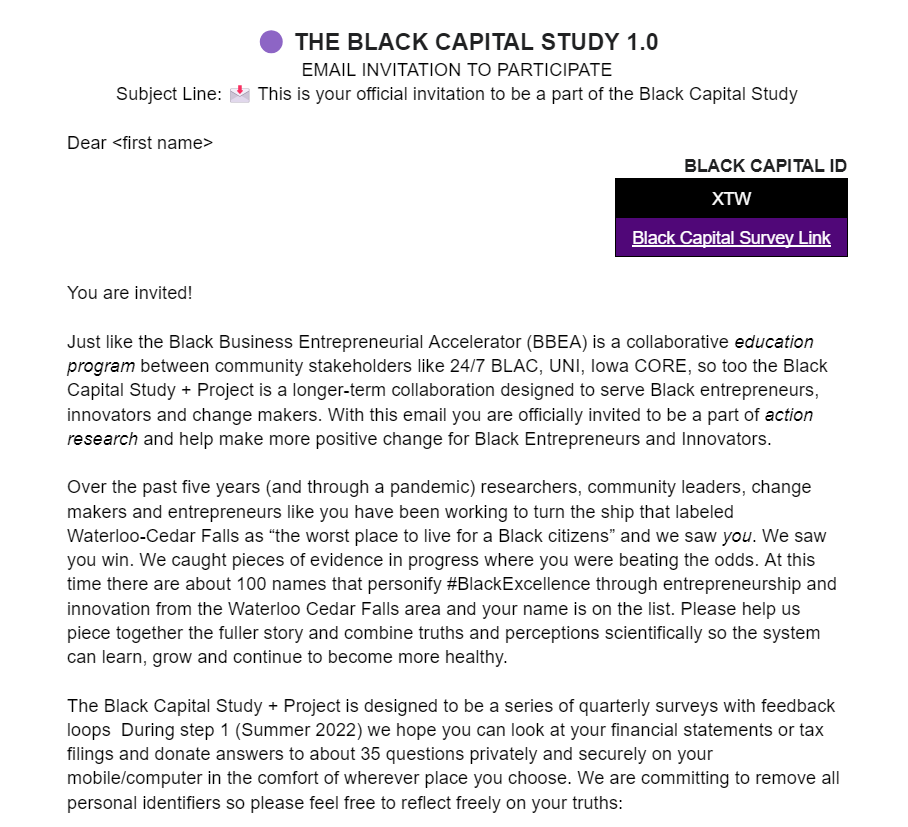
The Black Capital Study examined the barriers and resources shaping Black entrepreneurship in Cedar Valley, Iowa. Working through the University of Northern Iowa’s John Pappajohn Entrepreneurial Center, I co-led mixed-methods research to connect community experience with decisions about programming and support.

My approach
How I worked through it.
Build participation through community relationships
The project worked with community partners to recruit entrepreneurs and create opportunities for participation. Listening and relationship-building were part of the research design.
Study multiple forms of capital
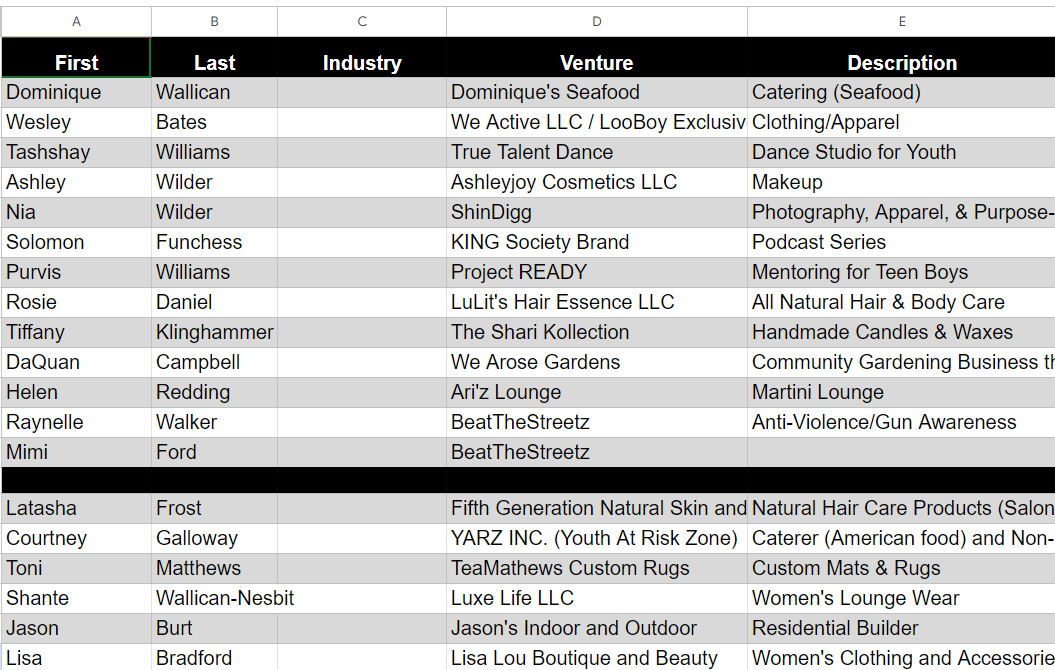
Surveys and qualitative inquiry explored economic, social, cultural, symbolic, and emotional capital. Interviews and focus groups added context to the patterns in the structured data.
Return the evidence to the community
Workshops and stakeholder presentations helped translate findings into programming recommendations. The Black Capital Database organized research for continued learning.
Evidence to decisions
What mattered. What it changed.
Funding was connected to networks
Entrepreneur experiences linked financial barriers with access to professional relationships, mentorship, and institutional knowledge.
Design directionConsider network-building and relevant business education alongside financial support.
A single method could not explain the experience
Structured capital profiles showed patterns, while personal narratives explained how those barriers appeared in daily business decisions.
Design directionUse qualitative and quantitative findings together in recommendations.
Research needed to support action beyond the study
Community partners needed a usable evidence base for programming and stakeholder conversations.
Design directionCreate a structured database and adapt findings for multiple audiences.
Contribution and outcome
Evidence to guide community programming.
The research created an evidence base for the Black Business & Entrepreneurship Accelerator and contributed to decisions about community support and resource allocation. Its value included a structured database and findings that could support programming and funding conversations.
How to read the outcome
This was collaborative research with more than 100 entrepreneurs and business owners. Program funding, accelerator recognition, and business performance depend on the work of many contributors; they are not isolated effects of the study.

Reflection
Community research requires accountability to the people represented in the findings. Returning the work to participants matters as much as delivering a report to the commissioning organization.Let’s talk through the work