
The question
Where should a platform standardize—and where does variation serve a real need?
Different business areas had developed different versions of common governance journeys. Data requirements, approval steps, and interface behavior varied, making the experience difficult to understand and the platform difficult to evolve. I mapped those differences across initiation, build, deployment, and operation workflows.
My approach
How I worked through it.
Compare journeys against a common baseline
I used a reference workflow to catalog where other journeys diverged. Mapping included screens, forms, automated messages, approval dependencies, and unresolved questions.
Bring the user evidence into the map
I connected the workflow inventory with survey comments, in-app feedback, and earlier interviews. This distinguished structural variation from pain points that users actually experienced.
Create a staged path forward
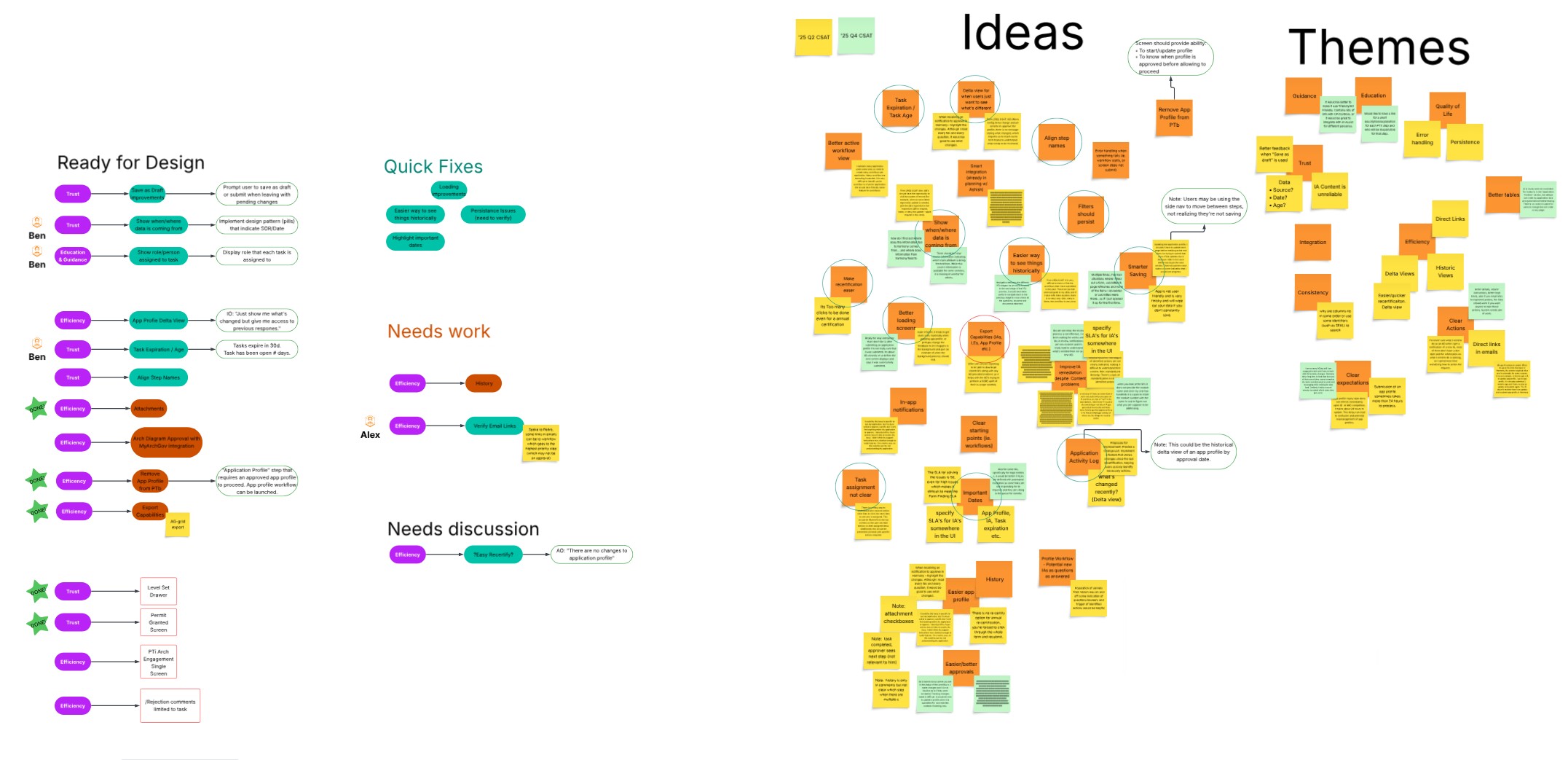
Cross-functional synthesis grouped findings into quick fixes, items ready for design, and issues needing further work. This helped teams act while the larger architecture was still being discussed.
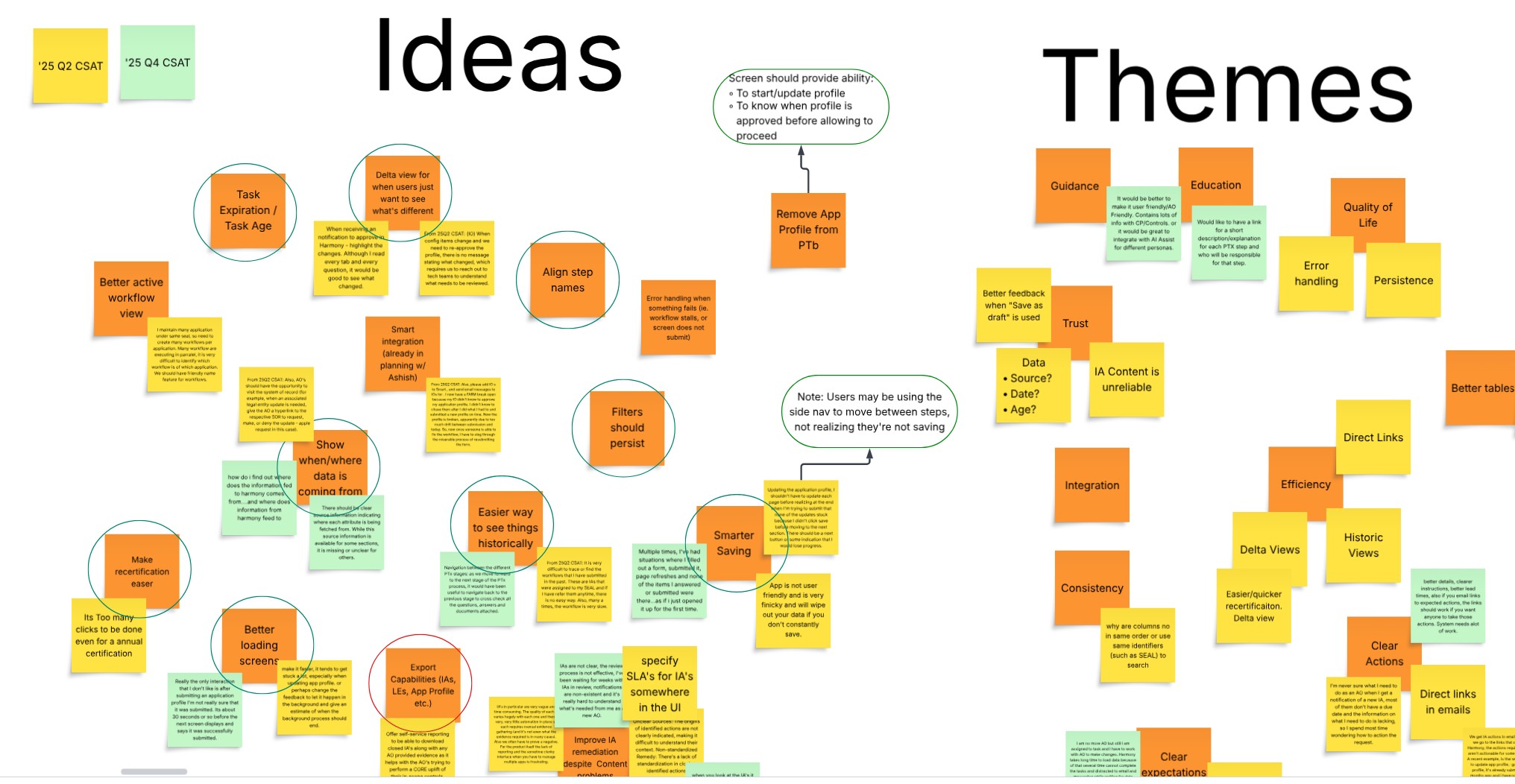
Evidence to decisions
What mattered. What it changed.
Repeated review created avoidable effort
Recertification could require reviewing extensive unchanged information to find a small number of updates.
Design directionPropose a delta view that highlights changes within the review context.
The work continued beyond the interface
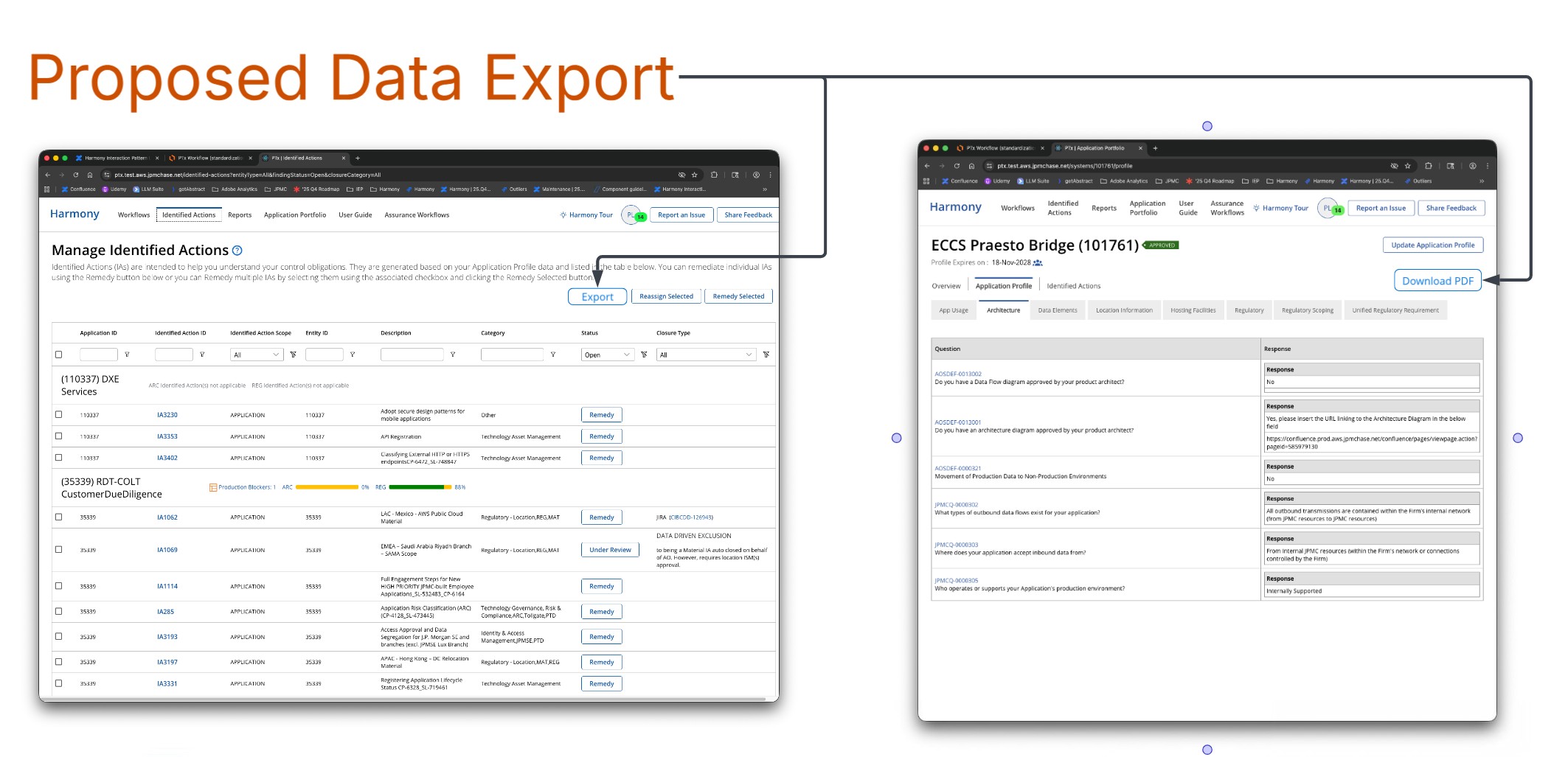
Audit and review tasks required information to travel into offline workflows.
Design directionPrototype export within application profiles.
Small fixes and structural changes needed different planning
Clear deadlines, direct notification links, and persistent form data could be addressed separately from wider workflow unification.
Design directionSeparate near-term improvements from the longer-term roadmap.
Contribution and outcome
A shared blueprint and a staged roadmap.
The work produced a common view of fragmented journeys and informed a longer-term standardization direction. It also supplied concrete concepts for a delta view and offline export, alongside smaller usability recommendations.
How to read the outcome
The delta view and export were proposals or prototypes. Reduced cognitive effort and engineering duplication are intended benefits; this summary does not present them as measured post-launch results.
Reflection
A map becomes useful when people can make a decision with it. Connecting each branch and friction point to a source helped stakeholders discuss the same problem.Let’s talk through the work